
Defining branded and non-branded keywords is only the starting point. Each type plays a completely different role in how users find you, engage with your brand, and eventually convert.
Branded keywords reflect demand you’ve already created, while non-branded keywords help you reach new audiences and expand organic visibility.
Understanding this difference is crucial before you build or refine your keyword strategy.
Why the Difference Between Branded Keywords and Non-Branded Keywords Matters for Your Keyword Strategy
Every successful SEO strategy starts by knowing what people search for, yet many marketers overlook one of the most fundamental distinctions in search behavior:
Branded keywords vs non-branded keywords.
This difference drives:
- How you map content
- How you build keyword strategy
- How you allocate your PPC budget
- How you track organic traffic
- How you measure conversions
- How you design topic clusters
- How users move through your customer journey
If you explore your keyword data through tools like Google Search Console, GA4, Semrush, Ahrefs, or Surfer SEO, you will see two major keyword types appear again and again:
- Branded keywords: searches that include your brand.
- Non-branded keywords: searches that don’t include any brand name.
Both types of keywords matter; branded keywords boost your product or service visibility, while considered non-branded keywords improve overall keyword ranking and organic reach.
- Non-branded keywords drive discovery, reach, and category authority.
- Branded keywords drive conversions, loyalty, and revenue.
This guide breaks down everything you need to know about branded keywords and non-branded keywords, including definitions, examples, SEO frameworks, PPC strategies, SaaS examples, keyword types, segmentation, search intent, SERP behavior, GA4 tracking, GSC filters, and more.
What Are Branded Keywords?
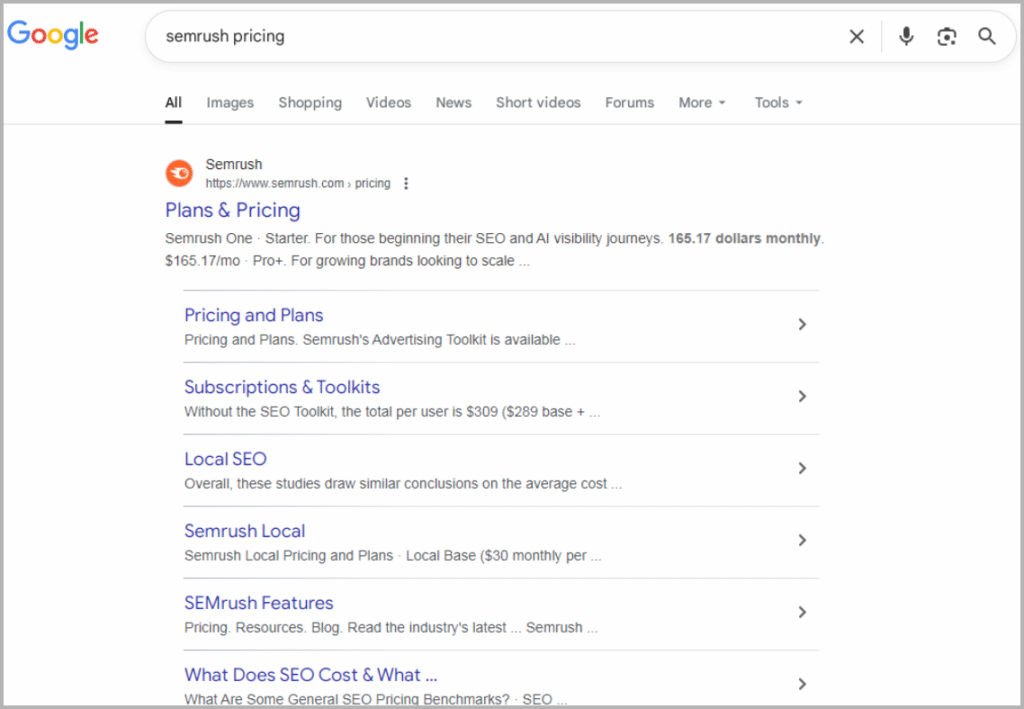
Branded keywords are search terms that include your brand name, product, or service, sometimes even misspellings.
When users search these branded queries in organic search, they already know your brand and often have a specific intent or purpose.
Examples of branded keywords:
- “Semrush pricing”
- “Ahrefs vs Semrush”
- “Canva Pro templates”
- “Notion calendar view”
- “Shopify themes”
These branded SEO keywords reflect navigational and transactional search intent. They come from users at later stages of the customer journey (MOFU or BOFU).
Main Characteristics
Branded organic keywords:
- Include your brand name
- Carry strong navigational intent
- Represent high-quality organic traffic
- Convert at 3–8x higher rates than non-branded keywords
- Have low keyword difficulty
- Have low CPC in paid search
- Have a high CTR in Google Search results
- Help protect your brand reputation in SERPs
Branded organic keywords often reflect brand awareness, brand loyalty, and customer trust.
Branded Keyword Examples (SaaS & Digital Tools)
Here’s a list of branded keywords across popular SaaS and digital tool categories:
Semrush
- Semrush pricing
- Semrush keyword magic tool
- Semrush free trial
- Semrush competitor analysis
Ahrefs
- Ahrefs keyword explorer
- Ahrefs free tools
- Ahrefs vs Semrush
- Ahrefs site audit
Canva
- Canva resume templates
- Canva Pro features
- Canva brand kit
- Canva infographic templates
Shopify
- Shopify themes
- Shopify beginner’s guide
- Shopify checkout app
- Shopify POS features
Notion
- Notion templates
- Notion project management
- Notion CRM
- Notion for startups
Zapier
- Zapier login
- Zapier automation
- Zapier vs Make
- Zapier integrations
These branded terms show what branded search looks like in real-world search engine behavior.
Types of Branded Keywords (Essential Keyword Types to Know)
Branded keywords fall into multiple categories based on user intent.
1. Pure Brand Queries
- “Semrush”
- “Notion”
- “Canva”
These are direct navigational terms.
2. Brand + Feature Terms
- “Ahrefs keyword generator”
- “Shopify checkout editor”
- “Canva AI image tool”
These indicate a specific product feature users want to explore.
3. Brand + Product Keywords
- “Notion CRM template”
- “Zapier workflow builder”
These represent product-level interest.
4. Brand + Commercial Investigation Keywords
- “Semrush vs Ahrefs”
- “Canva alternatives”
- “Shopify vs WooCommerce”
These reveal strong buying intent.
5. Brand + Transactional Keywords
- “Semrush coupon”
- “Canva Pro discount”
- “Shopify 1 dollar plan”
Users searching for these branded keywords often are close to converting.
6. Misspellings & Variants
- “canvaa”
- “ahref”
- “shopfy login”
- “semi rush”
All still count as branded keywords.
Why Optimizing for Branded Keywords Matters for SEO and PPC
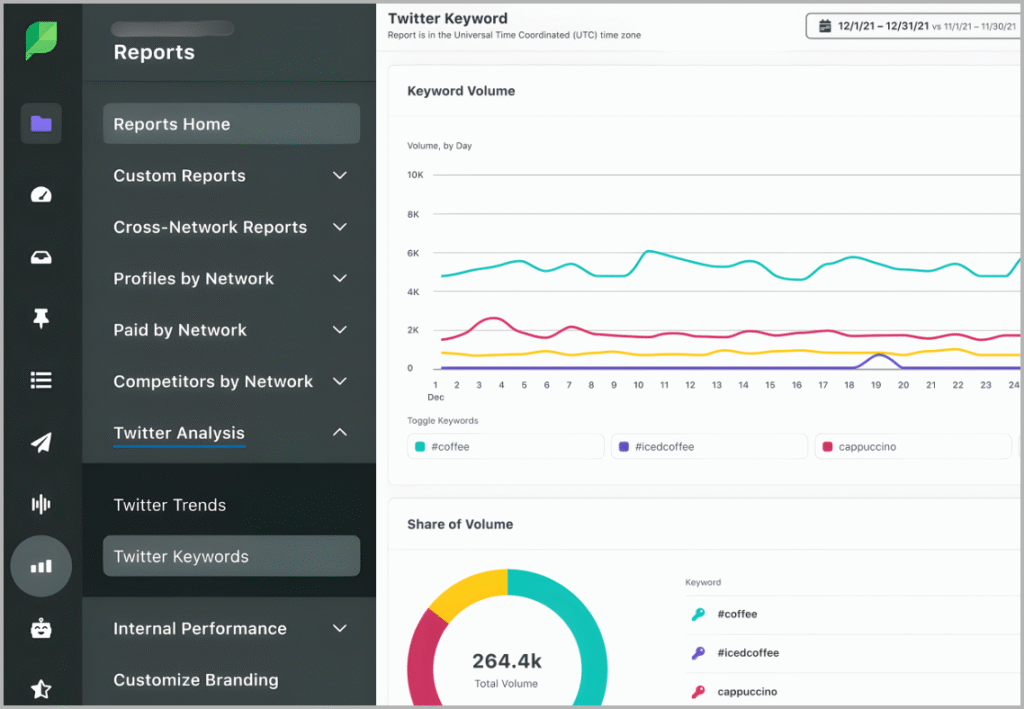
Branded keywords help strengthen both organic and paid visibility.
Investing in branded keywords is crucial because they reflect high-intent branded traffic and offer exceptional performance across every marketing metric.
Here’s why they matter:
1. Branded Keywords Bring High-Intent Traffic
Traffic from Branded keyword represents users who:
- know your brand
- trust your brand
- understand your offerings
- are ready to convert
This is why branded keyword search queries generate some of the highest conversion rates in Search Engine Optimization.
2. Branded Keywords Have Higher CTR
Users typing your brand name will almost always click your site.
Branded keyword CTR is often:
40% → 70% → even 80%+ for some brands
Because Google sees your site as the most relevant match, your branded search terms become your strongest SEO assets.
3. Branded Keywords Have Lower CPC in Google Ads
Branded PPC keywords are significantly cheaper because:
- Google rewards relevance
- You naturally achieve a high Quality Score
- Competitors rarely outrank you without high bid pressure
Using branded keywords in your search ads helps you capture high-intent clicks more efficiently and strengthens the success of branded ad campaigns.
4. Branded Keywords Support Brand Protection Campaigns
Competitors often bid on branded keyword searches like:
- Wix bidding on “Shopify”
- Make.com bidding on “Zapier”
- Jasper AI bidding on “Writesonic”
Running branded campaigns protects your brand visibility and ensures your brand owns the top position for every targeted branded keyword.
5. Branded Search Helps Build Brand Reputation in SERPs
Branded search results often display:
- sitelinks
- knowledge panels
- product panels
- reviews
- FAQs
- social profiles
- YouTube videos
A strong branded presence across search engine result pages builds trust, boosts visibility, and establishes a strong brand reputation.
Now that branded keywords are clear, let’s explore the far broader keyword category: non-branded keywords.
What Are Non-Branded Keywords? (Understanding Non-Branded Search)
Non-Branded Keyword Definition
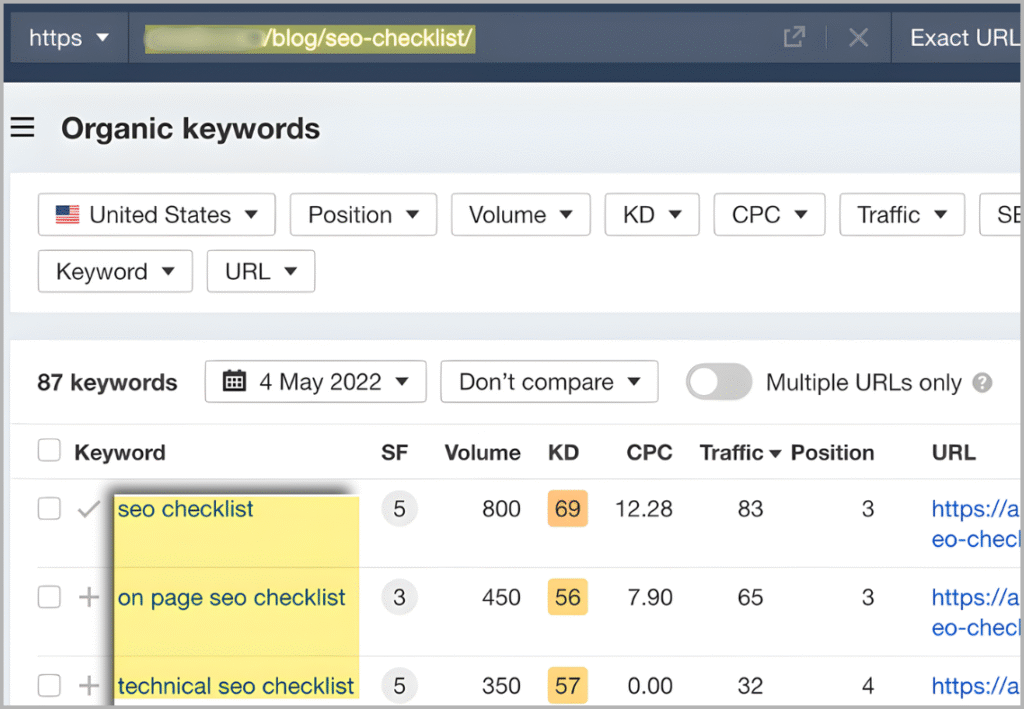
Non-branded keywords refer to search queries that do not contain a brand name. They reflect general information, problem statements, product categories, and comparison searches that do not specify any brand.
Non-Branded Keyword Examples (Real Non-Branded Search Queries)
- “SEO checklist”
- “on page SEO checklist”
- “technical SEO checklist”
- “AI writing tools”
- “project management templates”
These non-branded search queries represent category-level interest and discovery-stage behavior.
Types of Non-Branded Keywords
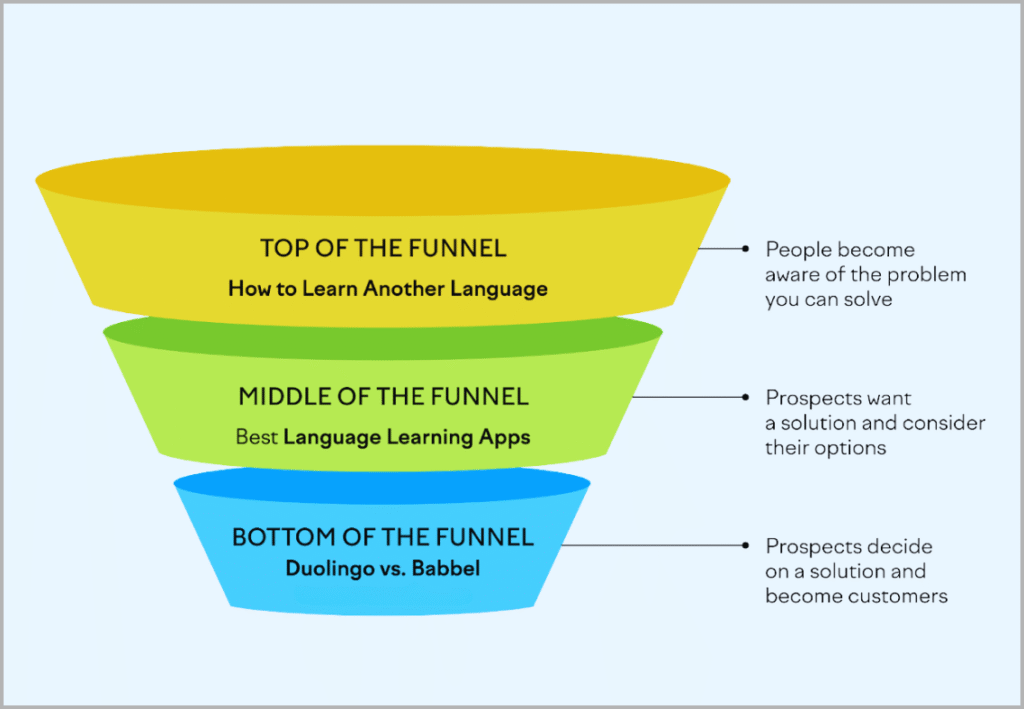
1. Informational Keywords (TOFU)
These keywords reflect early-stage learning:
- “How to learn another language”
- “What is keyword research?”
- “How to optimize content”
- “How does automation work?”
These attract new users to the top of the funnel and build awareness through traffic from non-branded queries.
2. Commercial Investigation Keywords (MOFU)
These keywords signal comparison and evaluation:
- “Best language learning apps”
- “Best SEO tools”
- “AI writing tool for bloggers”
- “Website builder for ecommerce”
Businesses target non-branded keywords like these to reach audiences actively researching solutions but not yet committed to a brand.
3. Transactional Non-Branded Keywords (BOFU)
These keywords reflect strong purchase intent:
- “Duolingo vs. babbel”
- “cheap SEO tools”
- “social media scheduler pricing”
- “best CRM for freelancers”
These keywords are competitive but drive strong conversion potential.
Why Non-Branded Keywords Matter
Without non-branded search, your traffic from non-branded keywords would stagnate, limiting growth potential.
Optimizing for Non-branded keywords plays a massive role in:
- category discovery
- SEO visibility
- long-term growth
- search demand creation
- topic authority
- organic traffic expansion
- pre-brand awareness
- multi-touch attribution
Without non-branded search, your traffic from non-branded keywords would stagnate, limiting growth potential.
Understanding why branded and non-branded search sets the stage for a clear comparison between branded vs non-branded keywords in 2025.
Branded vs Non-Branded Keywords: How They Shape Branded and Non-Branded Traffic
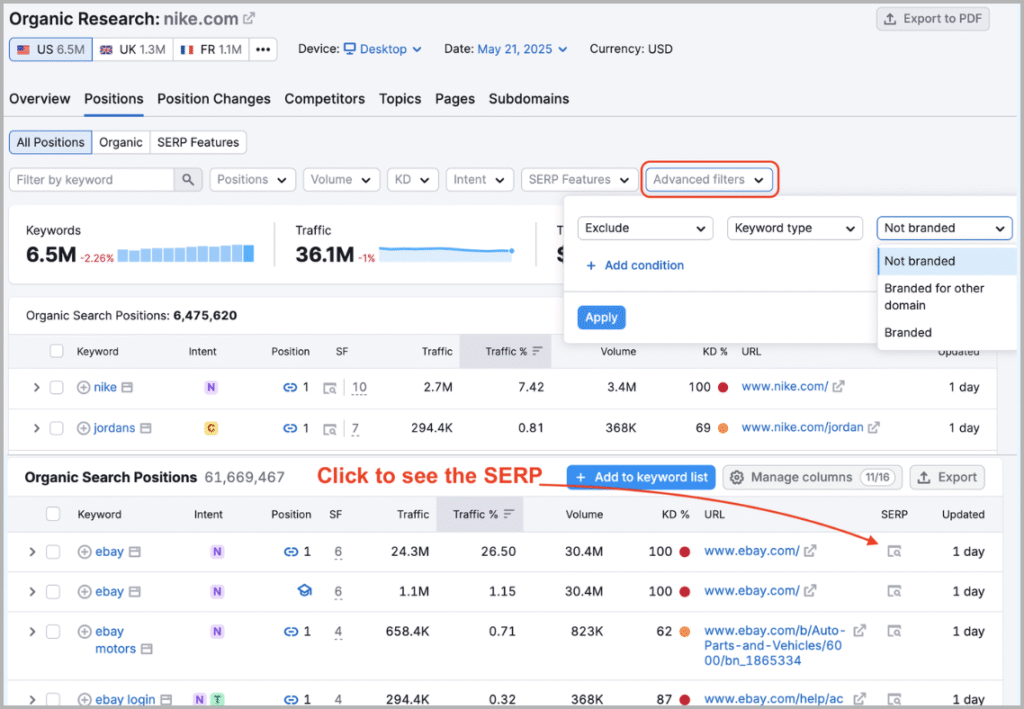
Recognizing the difference between branded and non-branded keywords and traffic is essential for building a balanced SEO strategy. Below is the most complete breakdown of branded vs non-branded keywords in 2025.
1. Search Intent Difference
- Branded search → navigational + transactional intent
- Non-branded search → informational + commercial investigation intent
2. Search Volume Difference
- Branded keywords → limited search volume
- Non-branded keywords → massive category search volume
3. SEO Difficulty
- Branded keywords → easy to rank
- Non-branded keywords → high competition
4. CTR Behavior
- Branded keywords → extremely high CTR
- Non-branded keywords → moderate CTR
5. Conversion Rates
- Branded → high
- Non-branded → moderate, indirect conversion
6. PPC Cost
- Branded CPC → low
- Non-branded CPC → high
7. Funnel Stage
- Branded → bottom of funnel
- Non-branded → top & middle of funnel
8. SERP Behavior
- Branded SERPs → brand assets dominate
- Non-branded SERPs → competitive information results dominate
How to Identify Branded & Non-Branded Keywords
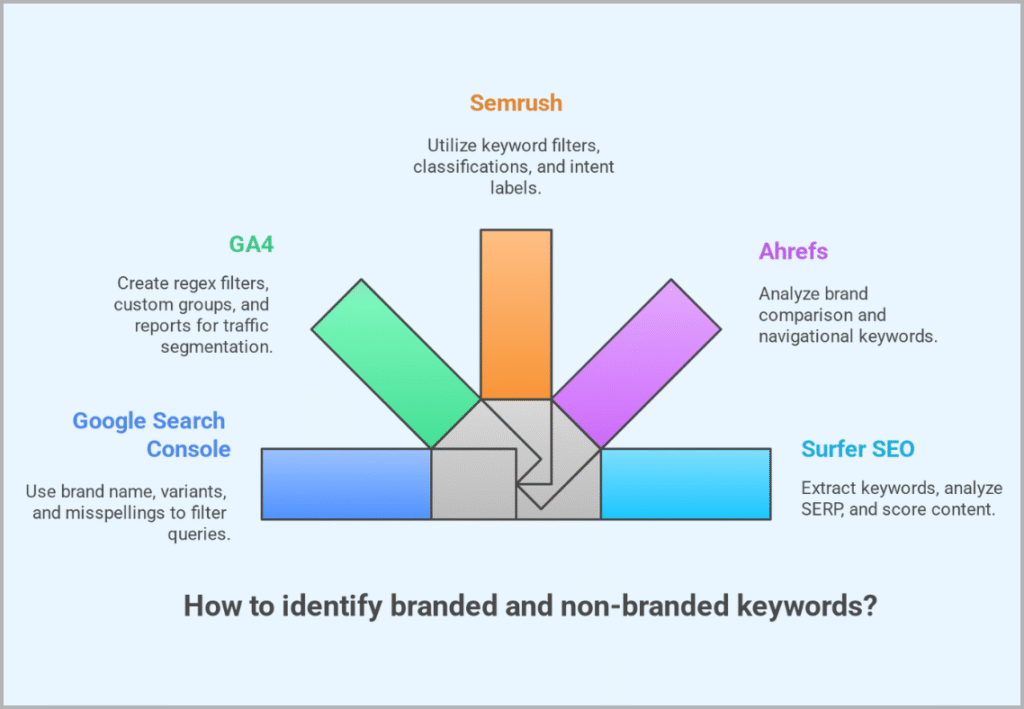
Identifying branded and non-branded keywords is essential for segmentation, content planning, keyword traffic analysis, and performance reporting.
Step 1: Use Google Search Console
Filter for branded queries by:
- using your brand name
- identifying brand variants
- filtering misspellings
- segmenting branded and non-branded traffic
This is crucial for branded traffic analysis.
Step 2: Use GA4 to Separate Branded & Non-Branded Traffic
In GA4, you can create:
- regex filters
- custom channel groups
- branded traffic report
- branded organic traffic segmentation
- branded paid traffic dashboards
This shows you the performance differences clearly.
Step 3: Use Semrush, Ahrefs, and Surfer SEO
Semrush
- branded vs non-branded keyword filters
- organic keyword classifications
- PPC keyword segmentation
- keyword intent labels
Ahrefs
- branded keyword analysis
- brand comparison keywords
- navigational keyword insights
Surfer SEO
- NLP keyword extraction
- SERP analysis
- content scoring
- semantic keyword mapping
These tools act as branded keyword tracking tools and branded keyword monitoring software.
How to Use Branded Keywords in SEO (Targeting Branded Keywords Effectively
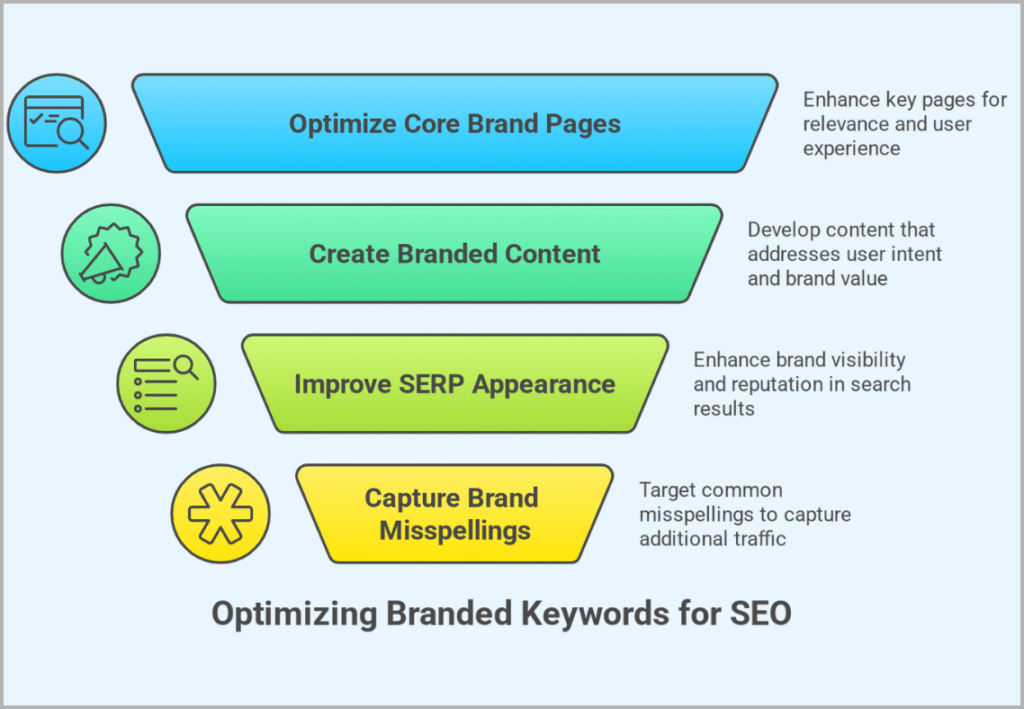
Here’s how to optimize for branded search queries.
1. Optimize Core Brand Pages
Update:
- homepage
- features pages
- pricing page
- login page
- product pages
2. Create Branded Content Assets
Examples:
- “Semrush vs Ahrefs: Which is Better?”
- “Canva Pro Pricing Explained”
- “Shopify Review for Beginners”
These branded keyword pages capture commercial intent.
3. Improve Brand SERP Appearance
Focus on:
- sitelinks
- knowledge panel
- reviews
- FAQs schema
- brand awareness
- brand reputation in SERPs
4. Capture Brand Misspellings
Users often type brand names incorrectly. Capture these branded keyword variations.
How to Use Non-Branded Keywords in SEO
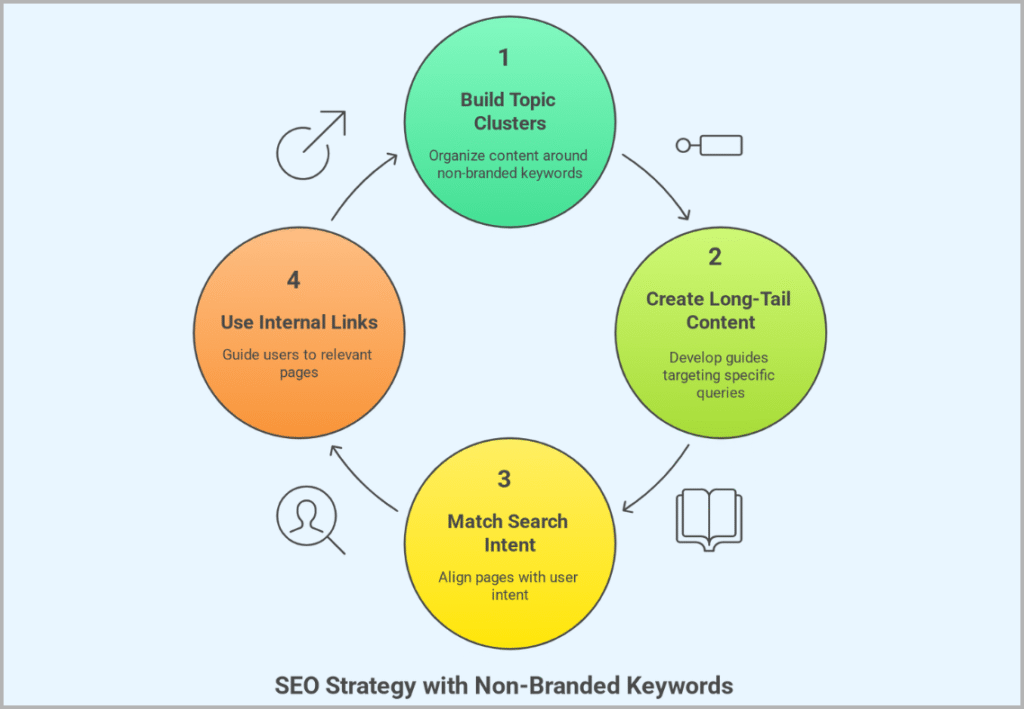
Non-branded keywords require a structured content strategy. By focusing on non-branded terms, you attract searchers who are exploring options rather than specific brands.
1. Build Topic Clusters Around Non-Branded Keywords
Create a cluster like:
Pillar: keyword research
Cluster pages:
- How to find low competition keywords
- keyword strategy guide
- commercial investigation keywords
- long-tail keyword examples
2. Create Long-Tail Content
Write guides targeting:
- “best SEO tools for beginners”
- “AI writing tools for blogs”
- “How to optimize on-page SEO”
3. Match Search Intent Precisely
Ensure pages align with:
- informational intent
- commercial investigation intent
- transactional intent
4. Use Internal Links
Push readers toward:
- product pages
- demos
- signups
- comparison pages
PPC Strategy for Branded & Non-Branded Keywords
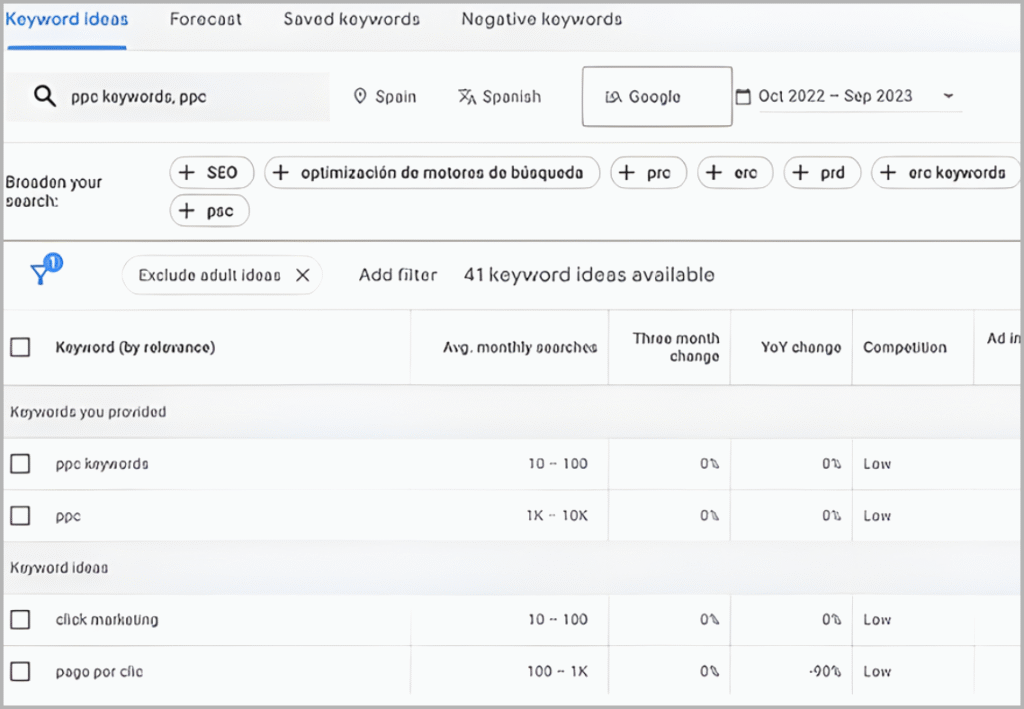
A balanced PPC strategy for branded and non-branded keywords helps maximize reach, control costs, and effectively capture both loyal and new customers.
Here’s how to handle branded vs non-branded campaigns in Google Ads.
1. Branded Campaigns in Google Ads
- low CPC
- high ROAS
- brand protection
- captures navigational search queries
- stops competitor bidding
2. Non-Branded Campaigns
- expensive
- competitive
- high search volume
- strong for acquisition
3. Best Budget Mix
A common ratio:
- 10–20% branded campaigns
- 80–90% non-branded campaigns
Best Tools for Tracking Branded & Non-Branded Keywords and Organic Traffic
Tracking tools play a key role in managing search campaigns and refining your branded and non-branded keyword strategy.
Best SEO Tools:
- Semrush
- Ahrefs
- Surfer SEO
Free Tools:
- Google Keyword Planner
- Google Search Console
- GA4
Final Thought: Why You Need Both Branded & Non-Branded Keywords
Branded and non-branded keywords serve different but equally important roles in your growth strategy.
Branded keywords convert high-intent users who already know your brand, while non-branded keywords bring in new audiences, expand organic reach, and build long-term topical authority.
When combined, they create a full-funnel keyword strategy that drives consistent traffic, maximizes conversions, strengthens overall SEO performance, and improves PPC efficiency, ensuring your brand grows steadily across every stage of the customer journey.
Common FAQs
Q.1) What is a branded keyword in SEO?
Ans: A keyword that includes your brand name.
Q.2) What is a non-branded keyword?
Ans: A keyword that doesn’t include any brand name.
Q.3) Are branded keywords cheaper in PPC?
Ans: Yes, much cheaper as compared to non-branded keywords.
Q.4) Are branded keywords easier to rank for?
Ans: Yes, because they’re tied to your brand, these tend to achieve faster, higher keyword rankings in search results.
Q.5) Should you bid on your brand name?
Ans: Yes, to protect yourself from competitors.
Q.6) How do you separate branded and non-branded keywords in GSC?
Ans: Use brand-name filters and regex.
Q.7) What is the ideal mix of branded and non-branded keywords?
Ans: Usually 10–20% branded + 80–90% non-branded.