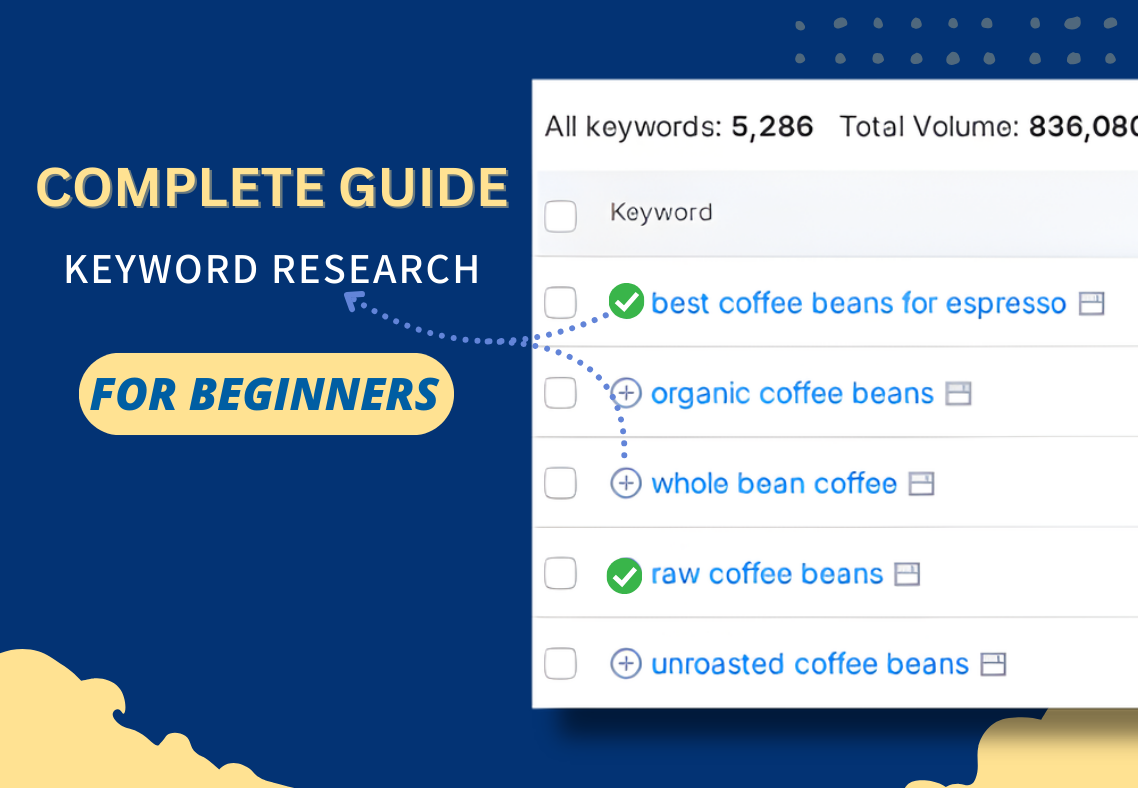


If you’re tired of writing “great content” that never ranks, this guide is for you.
The fastest way to get organic traffic today isn’t chasing huge, competitive phrases like “SEO” or “best CRM.”
It’s learning how to find low competition keywords with high traffic and then building a systematic keyword research workflow around them.
In this guide, we’ll walk through:
- What low competition keywords actually are
- Why they’re a steal deal in 2025 (especially for new sites)
- A 10-step core framework to find, evaluate, and prioritize them
- The best keyword research tools to uncover easy-to-rank keywords
- Real examples by industry
- Free, manual methods for finding hidden keyword opportunities
You’ll get a clear playbook that shows you how to find low-competition keywords with high traffic, map them to content, and build topical authority, all without needing thousands of backlinks.
What Are Low Competition Keywords, and Why do they Drive Easy Wins?
Let’s start with a clear definition.
What are Low Competition keywords?
In SEO, low competition keywords (or low-competition keywords) are search terms where the top-ranking pages are relatively weak compared to your site.
They usually have:
- Low keyword difficulty (low KD keywords / low keyword difficulty)
- A manageable competition level (few strong domains targeting that search term)
- Enough search volume or real traffic potential to be worth it
In practical terms, these are easy-to-rank keywords or less competitive keywords that you can realistically rank for on the first page without a huge link profile.
You’ll see them described as:
- low difficulty SEO keywords
- low competition SEO keywords
- Keywords with low competition
- low competition niche keywords
- low competition topics
- low competition terms for SEO
They’re often long-tail keywords or long-tail search terms like:
“best keyword research tools for beginners”
“low competition keywords for ecommerce”
“how to find niche keywords with low competition”
These search queries are more specific, have less competition, and are usually used by people closer to taking action.
Why Low KD keywords outperform high-competition terms
Most marketers obsess over “big” competitive keywords (competitive keywords) that their competitors rank for.
But ranking for those competitive keywords can take years.
Low competition keywords are different:
- You can rank for keywords faster, even with a small site.
- They often have high search volume and low competition relative to your authority.
- They deliver high search volume and low difficulty traffic with less effort.
Think of them as low-hanging fruit SEO: you target keywords with a lower difficulty and higher ranking potential, so each published page has a realistic chance to drive organic search traffic.
Search Volume vs Traffic Potential: The Real Picture
A mistake many beginners make: looking only at search volume inside a keyword research tool or Keyword Planner.
In reality, what you really care about is:
- Traffic potential evaluation (how much traffic the top page actually gets)
- Search volume vs traffic potential (a keyword may have “200 searches,” but the top result gets 1,000+ visits from all the related keywords it ranks for)
Modern tools like Ahrefs, SEMrush, and SE Ranking help you:
- See organic search results and organic search traffic
- Compare keyword competition metrics across list of keywords
- Spot keyword opportunities where traffic is high but competition level is low
Why do they matter?
Low competition keywords are a steal deal because they align perfectly with how search works in 2025:
Google’s shift to intent + semantic search
- Google increasingly understands search intent, search queries, and natural language search queries, not just exact-match keywords.
- That means semantically related keywords and keywords related to a topic help you build topical authority.
Topical authority signals
- By publishing clusters of low competition content ideas around one topic and linking them, you signal that your site covers the entire topic.
- This boosts your topical authority building and helps rank for more target keywords and keywords for SEO over time.
AI Overviews & conversational queries
- AI Overviews and generative results rely on broad topic understanding and semantically related keywords, not just one search term.
- Long-tail low competition keywords and long-tail keywords often appear in these conversational answers.
Perfect for new websites
- New sites often have low authority and struggle with high competition search results.
- Targeting low domain authority keywords that competitors ignore helps you identify low-competition keywords, win quick rankings, and drive SEO traffic growth keywords from day one.
In other words, target low-competition keywords is the smartest way to grow organic search with limited resources.
That’s why the next step is to learn how to identify low competition keywords using a clear, data-driven framework that helps you find quick-win opportunities.
How to Identify Low Competition Keywords (The Core Framework)
Now let’s walk through a 10-step framework you can use on any project to identify keywords:
You can use this as a keyword research workflow to:
- Find keywords with low competition
- Evaluate keyword competitiveness
- Map them to content
- And consistently discover high traffic, low competition keywords
We’ll blend:
- Data from keyword research tools
- Manual search engine analysis
- NLP keyword discovery and clustering
Step 1: Build Seed Keywords to Power Your Keyword Research Process
Every great keyword list starts with a solid base.
Your seed keywords are the starting point to find keyword ideas and discover low competition opportunities.
Where to get seed ideas
Business and product
- What problems do you solve? What search queries would a user type into Google search?
- Example: “SEO keyword ideas,” “keyword research tool,” “keyword analysis.”
Customer language
- Look at emails, sales calls, live chat, Reddit, Quora – these are full of natural language search queries and search term variations.
Competitor URLs
- Plug competitor blogs and landing pages into a keyword research tool.
- You’ll see keywords your competitors rank for, plus keywords that your competitors ignore.
Use entity-based keyword research
At this stage, you’re doing:
- Keyword extraction from competitor pages
- Keyphrase extraction via tools or NLP
- Entity-based keyword research (brands, tools, problems, categories)
- Building an initial list of keywords and list of seed keywords
You might start with broad keywords like:
- “low competition keyword research”
- “keyword research for beginners”
- “long-tail keyword strategy”
- “how to find low competition keywords”
From here, you’ll expand using tools.
Step 2: Use Keyword Tools to Find New Keywords and Expand Your List
Now it’s time to turn a few seeds into a keyword list of hundreds of ideas.
Use the keyword research tool or keyword search software (SEMrush, Ahrefs, SE Ranking, KWFinder, etc.) to:
- Generate keyword ideas with low competition
- Find keywords using filters, modifiers, and reports
- Compare keywords your competitor’s site ranks for vs your own
You’ll rely heavily on:
- Query expansion
- NLP keyword discovery
- Semantic similarity keywords
- Topical keyword groups and keyword clustering algorithms
Look for:
- High volume low competition keywords
- Keywords often ignored by big brands
- Keywords are terms that your audience actually uses, but your content doesn’t yet target
As you expand, you’ll:
- Build a keyword list of keywords to target
- Include related keywords and semantically related keywords
- Start grouping keywords with high potential but lower competition
This is where tools like SEMrush’s Keyword Magic Tool or Ahrefs’ Matching terms reports shine, because they help you:
- Find the right keywords
- Discover new keyword ideas
- Filter by low keyword difficulty and competition level
Step 3: Check and Compare Keyword Difficulty to Target Easier Terms
Most guides say “just filter for KD under X,” but that’s not enough.
Keyword difficulty analysis is your first quantitative filter, not the final verdict.
What is keyword difficulty?
Most tools provide a keyword difficulty metric that estimates how hard it is to rank in the top 10:
- Ahrefs has Keyword Difficulty (KD).
- SEMrush uses a percentage-based difficulty score.
- SE Ranking has its own keyword difficulty metric.
Use KD to:
- Spot low KD keywords and keywords with low KD score
- Quickly filter out ultra-competitive termsIdentify easy keywords to rank for and easy SEO keywords for beginners
What KD ranges to target
For most new or mid-tier sites:
- KD 0–10 = very easy, ideal easy-to-rank keywords
- KD 10–30 = manageable low difficulty or low difficulty long-tail keywords
- KD 30–50 = may still be viable if your domain is strong
But remember: low KD ≠ guaranteed low competition. You still need to:
- Evaluate SERP strength analysis
- Consider keyword competition metrics beyond just KD
KD is a quick way to identify low-competition keywords, but you never trust it blindly.
Step 4: Analyze SERP and Keyword Competition to Spot Ranking Gaps
Now you leave the tool dashboard and go right into Google search results.
Your goal: understand the competition level in real search results.
Open each keyword in an incognito Google search and study the organic search results:
What to look at
Domain strength
- Are the top results big brands or small blogs?
- Are there forums, niche sites, or Q&A pages in the top 10?
- This helps you identify the keywords you can realistically compete for.
Content quality & intent
- Do the top pages actually solve the query?
- Could you create something significantly better? Backlinks & authority
- Use tools to see if any top pages rank with few links.
- This is a sign of lower competition and low-competition keyword opportunities.
This is your SERP competition analysis. Tools like Surfer’s SERP Analyzer and Ahrefs/SEMrush SERP overviews help you:
- Run a SERP analyzer on each given keyword
- Compare keywords by difficulty and SERP profile
- Identify less competitive keywords and low-competition keyword opportunities
You’re basically asking:
“Can my site reasonably appear on this first page without heroic link-building?”
If yes, you’ve found a target low-competition keyword.
Step 5: Validate Traffic Potential for Every New Keyword Opportunity
Next, you check traffic potential evaluation.
Two keywords might have the same search volume, but very different real-world traffic:
- One might be dominated by ads, SERP features, and big brands.
- Another might send thousands of visitors to a single niche page.
Use tools like Ahrefs and SEMrush to:
- See total organic search traffic of the top-ranking page
- Analyze search queries and keywords often appear in that page’s keyword list
- Understand how keywords with the highest traffic actually behave in the wild
Focus on:
- Keywords with high search volume and low competition
- High traffic low competition keywords
- Find high search volume phrases combined with low KD and weak SERP
When you focus on low-competition keywords, you’ll find high volume, easy keywords that can genuinely move the needle.
Step 6: Analyze Search Intent and Relevance for Smarter Targeting
A keyword can have low competition but still be a bad fit if the search intent doesn’t match what you sell.
Here you focus on:
- Search intent alignment
- Intent classification (informational, commercial, transactional, navigational)
- Make sure the right keywords to target also match your sales funnel.
Look at:
- The type of pages in the SERP (blogs, product pages, category pages, tools)
- How keywords that match the query are used in titles and headings
- Whether users seem to want information, a tool, or to buy
Use this to:
- Filter out keyword ideas that don’t fit your business
- Keep only keywords that can help your organic and revenue goals
When search intent alignment is strong, your content has a much better chance of sticking on page one.
Step 7: Cluster Keyword Ideas into Thematic Topic Groups
Now you should have a solid list of:
- Low KD keywords
- Low competition keywords with high traffic potential
- A mix of broad keywords, long-tail keywords, and semantically related keywords
Next step: keyword clustering.
Group your list into topical keyword groups based on:
- Shared search intent
- Similar wording or themes
- Overlapping search queries in SERP results
This is topic clustering for SEO. It helps you:
- Create content hubs around one main topic
- Avoid cannibalization by knowing which keywords to target on the same page
- Turn a single low-competition keyword into an entire mini-topic
Many modern tools (Surfer, SEMrush, SE Ranking, SearchAtlas, etc.) now help compare keywords between domains, auto-generate clusters, and spot keywords your site is missing.
Step 8: Prioritize Keywords Using an Opportunity Score
You probably now have more good keywords than you can execute.
Time to prioritize.
A simple way is to build a keyword opportunity score such as:
Keyword Opportunity Score = Traffic Potential ÷ Keyword Difficulty
This helps you rank:
- Profitable low competition keywords
- Keywords with easy ranking
- Keywords with high traffic potential but low KD
Look for:
- High volume low competition keywords
- Keywords for new websites that bring quick wins
- SEO keyword ideas that naturally fit into future clusters
You can also use a keyword gap tool to compare keywords your competitors rank for vs keywords your site doesn’t rank for at all. That’s how you find low-competition keywords using competitor data.
Step 9: Map Low Difficulty Keywords to Relevant Content Pages
Next, move from research to execution.
Use keyword mapping to connect each cluster to:
- A blog post
- A product or category page
- A comparison or tools page
This answers:
- Which page will target each low-competition keyword?
- How will keywords into your content be distributed?
- How will keywords often appear across your hub, not just one article?
At this stage, you:
- Turn a keyword list into a content roadmap
- Find keywords to target per URL
- Plan organic search growth around target low-competition keywords
Step 10: Create Content Optimized for LowKD Keywords
Now you actually write.
For each page:
- Use the primary low competition keyword in:
- Title, H1, intro, URL
- Sprinkle related keywords, semantically related keywords, long-tail search terms naturally
Add keywords into your content in headings, subheadings, FAQs
Your on-page checklist should include:
- Semantic keyword extraction from top-ranking pages
- Use of keywords are usually found in expert content
- Internal linking to other low-competition topics and low competition content ideas
- Clean keyword analysis and structure, no stuffing
Combine this with solid UX and you’ll see rankings move faster than if you only chased big, competitive phrases.
To make this process easier, let’s explore the best tools to find low competition keywords in 2025 that simplify research, reveal ranking gaps, and uncover untapped traffic opportunities.
Best Tools to Find Low Competition Keywords (2025 Comparison)
Now let’s talk tools. These are the best keyword research tools and SEO tools for long-tail keywords that make the entire process easier.
You can present this in a table on your page comparing:
- Core USP
- Best use case
- Strength for low-competition keyword discovery
- Pricing tier (high level, not exact keyword research pricing)
SEMrush (Keyword Magic Tool + KD + Traffic Analytics)
Best for: All-in-one research and competitor insights.
SEMrush’s Keyword Magic Tool is excellent when you want to:
- Find low competition keywords from a single seed
- Get search volume, KD, and keyword competition metrics
- Generate list of keywords grouped by topics automatically
You can:
- Use Keyword Overview to see a keyword like “how to find low competition keywords” and its intent, volume, and difficulty.
- Use Keyword Magic Tool to build an initial list of keywords and list of seed keywords.
- Use Keyword Gap tool to compare keywords between domains and discover find less competitive terms and keyword opportunities you don’t rank for.
SEMrush also offers a SEMrush keyword difficulty tool for quickly evaluating competition keywords.
Ahrefs (Keyword Explorer + Traffic Potential)
Best for: Realistic traffic potential and SERP analysis.
Ahrefs’ Keywords Explorer is ideal when you want to:
- See traffic potential evaluation and not just search volume
- Filter for low keyword difficulty and identify low-competition opportunities
- Analyze organic search results quickly
Use it to:
- Find low-competition keywords using KD filters
- Discover how to check keyword difficulty properly
- See keywords your competitors rank for and keywords that your competitors ignore
If you’re serious about SERP-level analysis and traffic forecasting, Ahrefs is a powerful keyword research tool for low KD.
SE Ranking (Keyword Difficulty + Competitor Gap)
Best for: All-rounder with strong competitor features.
SE Ranking’s keyword difficulty, keyword gap tool, and competitor keyword research help you:
- Spot keywords your competitor’s site ranks for
- Uncover keyword gap analysis opportunities
- Find keywords with high potential and lower competition
Perfect when you want a slightly more affordable tool that still supports keyword analysis, rank tracking, and SEO keyword ideas across projects.
Surfer SEO (SERP Analyzer + Content Editor)
Best for: On-page optimization and SERP-driven term discovery.
Surfer’s SERP Analyzer and content editor help you:
- Analyze SERP strength analysis and keyword competition
- Extract semantically related keywords from the top-ranking pages
- Build outlines based on keywords often appear in SERPs
It’s especially strong when you already know what low-competition keyword you want to target and need to:
- Optimize content with keywords into your content
- Conduct multi-keyword analysis on closely related keyphrases with less competition and high relevance
Exploding Topics (Trend Discovery)
Best for: Zero-competition and emerging-topic discovery.
Exploding Topics surfaces new keyword ideas and topics before they appear in classic keyword tools.
You can use it to:
- Discover zero-competition keyword strategy opportunities
- Find new keyword trends, then validate them with keyword planner / other tools
- Spot low-competition keyword trends early and create content before others
Optional Tools Worth Mentioning
- Google Keyword Planner – Great as a free keyword planner to see baseline search volume, keyword competition, and discover keywords using modifiers.
- Moz Keyword Explorer – Solid for keyword competition and SERP overview.
- Mangools KWFinder – Simple interface focused on low difficulty keywords for smaller sites.
- KeywordTool.io / AnswerThePublic / AlsoAsked – Excellent for long-tail keyword, search queries, and questions.
All of these can act as:
- Keyword tool for beginners
- Easy keyword finder
- Or even entry-level paid keyword research tool if you’re just starting to buy SEO keyword tool access.
Low Competition Keyword Examples (By Industry)
To make this practical, let’s invent a few realistic examples. These are illustrative, not pulled directly from any specific tool.
For Blogs
Blogs often thrive on long-tail low competition keywords that answer specific questions.
Examples:
- “best keyword research tools for food bloggers”
- “how to find low competition keywords for blogs”
- “SEO keyword ideas for travel blogs”
- “low competition topics for parenting blog”
Here you can:
- Use low-competition keywords for blogs to build topic clusters
- Focus on keywords with low competition but steady search volume
For Ecommerce Websites
Ecommerce stores win big with product-led long-tail keyword phrases:
- “best budget running shoes for flat feet women”
- “organic dog food low grain for seniors”
- “high search volume and low competition jewelry keywords”
Here:
- Use low competition keywords for ecommerce to target category and product pages.
- Look at keywords that can help you rank for less competitive keywords with stronger purchase intent.
For Affiliate Sites
Affiliate sites, especially newer ones, benefit massively from high CPC low competition keywords:
- “best low competition keyword tool for bloggers”
- “SEO tools for long-tail keywords for Amazon affiliates”
- “keyword research tool for low KD SaaS reviews”
In this space:
- Go after low competition keywords for affiliate marketing
- Focus on buying intent and keywords often containing “best,” “vs,” and “review.”
These examples prove that finding low-competition opportunities is possible in any niche.
How to Find Hidden, High-Traffic, Low Competition Keywords Manually (For free)
Not every method needs a paid tool. You can find low competition gems manually using free sources.
1. Google Autocomplete
Start typing a seed query into Google search and watch Autocomplete suggest:
- Search queries people use
- Variations that are long-tail keywords often ignored by competitors
This helps you:
- Explore keywords often searched
- Build a list of keywords to later check with a keyword research tool
2. People Also Ask (PAA)
The People Also Ask box is a live stream of question-based search queries:
- These often contain less competitive keywords and long-tail keyword phrases.
- Many are perfect easy-to-rank SEO topics and easy ranking SEO topics.
You can:
- Collect keyword ideas directly from PAA panels
- Use them to build supporting articles around your main target keywords
3. Related Searches
Scroll to the bottom of the search results and you’ll find:
- Related keywords
- Variations of your target low-competition keywords
- Ideas for keywords to target next
These often show keywords with a lower difficulty but solid search volume.
4. Reddit, Quora, and Niche Forums
Communities reveal:
Natural language search queries
- Phrases where users complain, “I can’t find XYZ”
Real-world keywords are usually very different from tool suggestions
Use these platforms to find new keywords, then validate them with tools later.
5. Competitor Content Gaps
Even without paid tools, you can:
- Manually scan competitor blogs
- Look at what topics they repeat often
- Notice where they don’t go deep
Then, later with a tool, you:
- Use a keyword gap tool to find low-competition keywords using those URLs
- See keywords that your competitors haven’t targeted well
This is hands-down the best how to find low competition keywords for free workflow:
brainstorm → autocomplete → PAA → related search → competitor pages
→ validate with a free or trial keyword research tool
Common Mistakes to Avoid When Targeting Low Competition Keywords
Even with good tools, it’s easy to sabotage your success. The right keyword will help you stay focused and avoid wasting effort on unprofitable terms.
1. Only filtering by search volume
If you just chase high search volume metrics without looking at competition level or keyword competition metrics, you’ll end up with impossible targets.
2. Ignoring SERP strength
A keyword may look easy in tools, but be tough because:
- The SERP is full of big brands
- The organic search results are dominated by heavy hitters
Always pair keyword difficulty analysis with SERP competition analysis.
3. Overreliance on tools
Tools are incredible, but you still need:
- Manual search engine checks
- Human judgment about search intent and content quality
Don’t let a single given keyword look “easy” on paper fool you.
4. Targeting low intent topics
Some low competition terms for SEO don’t drive revenue.
Check whether the keyword:
- Attracts buyers or just curiosity clicks
- Fits in your keyword research workflow or business roadmap
5. Weak content structure
Even low-competition keyword pages can fail if the content:
Doesn’t fully answer the query
- Lacks related keywords and semantically related keywords
Has poor UX or thin content
Avoid this by using a clear outline, headings, and keywords into your content where they make sense.
Final Checklist: How to Find Low-Competition Keywords with High Traffic
Use this as a quick reference (and yes, something your readers can screenshot).
Start with business and audience
- Clarify your niche, offers, and customer pain points.
Brainstorm seed keywords
- Use customer language, competitor pages, and basic keyword research.
Use tools to expand your keyword list
- Pull keyword ideas, related keywords, semantically related keywords.
Filter by keyword difficulty
- Spot low KD keywords, low difficulty SEO keywords, and keywords with low KD score.
Check SERP competition manually
- Evaluate search results, content quality, and competition level.
Validate traffic potential
- Consider search volume vs traffic potential, not just raw volume.
Align with search intent
- Make sure each keyword matches your target user’s search intent.
Cluster into topics
- Use keyword clustering, topic clustering for SEO, and topical keyword groups.
Prioritize with an opportunity score
- Use a keyword opportunity score to decide what to publish first.
Map keywords to pages
- Assign primary and secondary target keywords to each planned URL.
Create high-quality content
- Include long-tail search terms, hidden keyword opportunities, and keywords often appear in the SERP.
Optimize and interlink
- Use internal links to connect related, low-competition topics and build authority.
Track and iterate
- Watch rankings, refine your keyword list, and continuously identify low-competition terms with new data.
FAQs
Q1. What is a good KD score?
For most new or small sites, KD under 20 is ideal for truly easy-to-rank keywords. Up to 30–35 can still be viable depending on your authority and content quality.
Q2. Can a new site rank for high-traffic, low-competition keywords?
Yes. If you focus on long-tail, low-competition keywords, keywords with lower KD, and smart search intent alignment, even a fresh domain can rank.
Q3. How do I find keywords with no competition?
Look for zero-competition keyword strategy opportunities via:
- Exploding Topics
- Autocomplete + PAA
- New product or feature names
- Niche communities
Then, validate the relevant keyword with a keyword research tool.
Q4. Is low competition keyword strategy still effective in 2025?
Absolutely. As AI-generated content floods the web, being intentional about less competitive keywords, semantically related keywords, and topic clustering for SEO becomes even more important.
Q5. What are easy SEO keywords for beginners?
Look for:
- Long-tail keyword phrases
- Keywords with low competition and decent search volume
- Queries that your keyword planner or free tools show as low competition level
These are your easy SEO keywords for beginners.
Conclusion
If you’ve ever felt like SEO is “too competitive,” the truth is this:
You don’t need to outrank everyone for the biggest keywords.
You just need a repeatable system to find low competition keywords, evaluate keyword competitiveness, and publish content that actually deserves to rank.
By combining:
Smart keyword research workflow
- Careful keyword difficulty analysis and SERP competition analysis
- Modern tools like SEMrush, Ahrefs, SE Ranking, and Surfer
- Manual checks using Google, PAA, forums, and communities
You can consistently uncover low competition keywords with high traffic, create content around them, and grow organic search in a predictable way.
And once you’re ready to scale, investing in the best low competition keyword tools or a paid keyword research tool is one of the smartest upgrades you can make to your SEO stack.